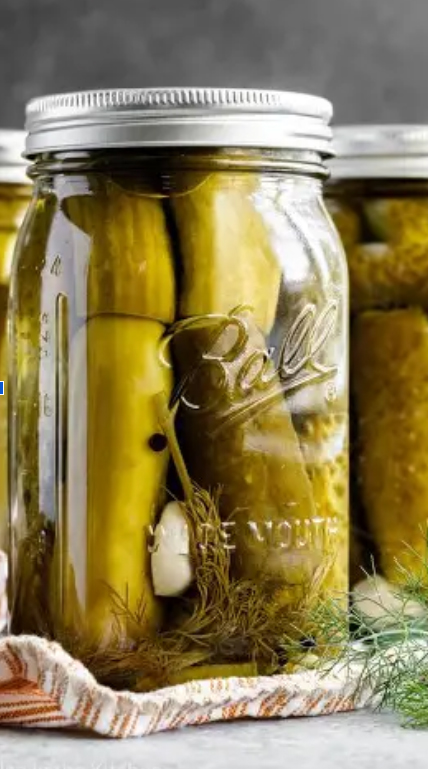
by Joyce Peters
On my way home from school on the Lower East Side of New York City I would sometimes stop for a dill pickle from the pickle shops on Essex Street. A vendor would fish one out of a real wooden barrel, hand it to me and I would walk away munching. I didn’t know then that this was unique to the Lower East Side or that these shops would disappear as the neighborhood changed. Pickles were a staple for the mostly Jewish immigrant population from Eastern Europe who lived there. Their descendants have prospered and moved away. Other groups have moved in. Change is the New York way.
It was hard to find a good pickle when we moved to California. It used to be the standard in New York deli’s to get a complimentary bowl of assorted pickled vegetables. No more, a skimpy pickle spear is probably more likely now.
Now that we know the benefits of fermented foods, I am less concerned with their high salt content. (There are worse guilty pleasures.) You can’t beat a pickle to complement a good sandwich.
To make a good pickle start with fresh pickling cucumbers especially when in season. A pickle is a living thing. Pickling cukes with their thick skins are brined with garlic and spices and no added vinegar is needed. The live organisms from the cucumbers and the environment produce their own vinegar. You decide whether you want a crunchy or soft pickle, spicy or mild.
Here is my recipe for Kosher dill pickles. Make it your own:
- 2 lbs. Pickling cucumbers – all a similar size – That’s 10-12 cukes about 4-5 inches long
- 8 cups filtered water (non-chlorinated-tap water may have chlorine which can inhibit fermentation)
- 8 tsp. Sea salt or kosher salt (we want a 2.5% brine when added to the water)
- 8-12 cloves garlic, sliced
- 1 teaspoon each: fennel seeds, coriander seeds, allspice, peppercorns, dill seeds, mustard seeds
- Big handful of fresh dill
- 1-3 fresh red chilies – or dried arbol, or add chili flakes (optional)
- 3-4 bay leaves (or a grape leaf) – helps keep pickles crisp
- A large crock (about 2 ½ gallon)
Rinse the cucumbers well. Place in an ice water bath to crisp them for 10-20 minutes
Warm up one cup of water on the stove, stir in all the salt until dissolved. Cool to room temp. Mix this with the other 7 cups of water.
In a large, clean jar or crock, layer the drained cucumbers, garlic slices, fresh dill, bay leaves and spices.
Pour the saltwater brine over the top leaving a little head room.
Weigh down the cucumbers with a small plate to keep the cucumbers under the brine. Cover the jar loosely. Place the crock on a pan or in a bowl to catch any overflow. Leave in a cool dark place for 3-7 days.
After 3 days, check for signs of life: bubbles, clouding. You can see the seeds moving up and down.
After 4-5 days cut a slice to taste to see if it is right for you. Some people like a fresher crisp taste, others like a tangier taste. For more tang, ferment longer and the pickles will be softer.
When it is right for you, refrigerate to slow down the process. I like to put the pickles in smaller jars in the refrigerator. Keep the pickles submerged in brine.You might have to burp the containers occasionally as the gas builds. Pickles should be good for a few weeks though they will get softer with time.
Notes:
If you need more brine, use the same ratio 1 tsp. Salt: 1 cup water to get a 2.5% saltwater brine. This level is safe to avoid spoilage and keep bad microbes at bay. You can go higher, if you like a saltier brine (do not exceed 3.5%).
If using a grape leaf, place it on the side of the jar, then layer the remaining ingredients.
If you really like crisp pickles, add ½ tsp. calcium carbonate (Ball brand – Pickle Crisp Granules) to the spice mix.
For a flavor bomb, add a little pickle juice to potato or macaroni salad.