
by Joyce Peters
In the past parsley was an afterthought. A spring of French curly parsley was added as a garnish not a flavoring. Today Italian flat-leaf parsley is commonly used to season foods. According to Rachel Ray Magazine, flat-leaf parsley adds a boost of fresh flavor without overwhelming food, while curly parsley’s grassy flavor and saltiness can be hit-or-miss at the table. The magazine also mentions that the curly parsley’s sturdy leaves are “more of a pain to chop.”
Most recipes using parsley call for a small amount of leaves. In soups and stews, it’s added early to flavor the liquid and loses its distinctness. In other recipes, it’s added at the end as the final touch to wake up a cooked product.
In chimichurri sauce, it is the main ingredient. Throughout Argentina and South America, chimichurri is brushed, basted, or spooned over grilled meats like chicken, beef, and fish. It’s also served as a dipping sauce or used as a marinade. Leftover sauce can be frozen in ice cube trays for later use.
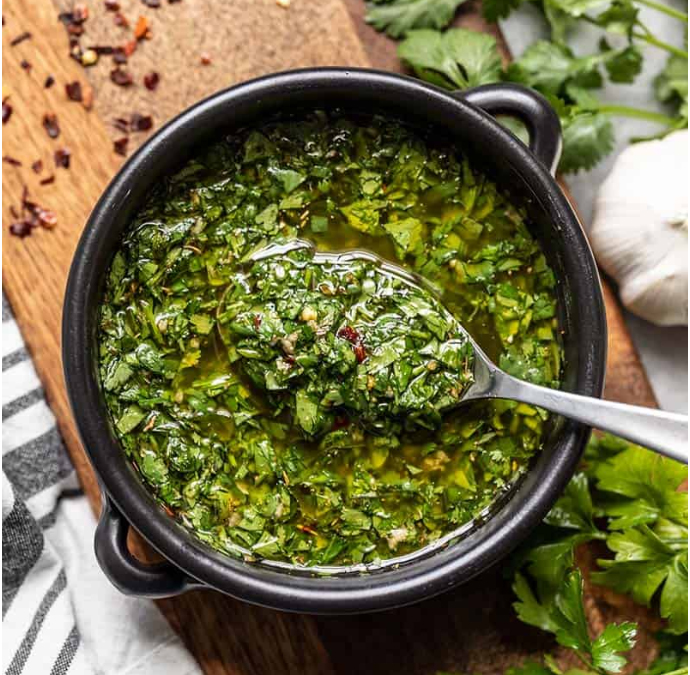 Chimichurri Sauce
Blender or food processor
Ingredients
- 1 bunch of parsley leaves
- 2-3 Tablespoons fresh oregano leaves
- 2 Tablespoons red wine vinegar
- 2 cloves garlic, peeled and cut in half
- ½ teaspoon red pepper flakes
- Zest of ½ medium lemon
- 2 Tablespoon red onion, minced (optional)
- ½ cup olive oil
- Salt & pepper to taste
In a blender or food processor combine the red onion, garlic, red pepper flakes and red wine vinegar. Let sit for 10 minutes. This diffuses the flavors and takes the bitterness out of the garlic.
Mix in parsley, oregano and lemon zest.
Place all into a blender/food processor with olive oil. Puree until your desired texture. Season with salt and pepper.
Warning: Generally in foods and nutrition, a varied diet is ideal rather than building your diet around one ingredient.
“Parsley is safe for most people when consumed in normal culinary amounts, as it contains beneficial vitamins and antioxidants. However, large amounts of parsley may be dangerous, particularly for pregnant women. It can stimulate menstruation and potentially lead to complications. Additionally, excessive consumption can lead to side effects such as anemia, liver toxicity, and kidney toxicity. Therefore, moderation is key when including parsley in your diet (WebMD)”.