by Joyce Peters
As food costs climb, let’s take a hard look at the higher cost of organic produce vs. conventionally grown. Whether or not you believe that the health and environmental benefits of organically-grown fruits and vegetables are a certainty, it is good to know which crops are grown commercially with heavy pesticide use.
Unless the produce is certified organic by the U.S. Department of Agriculture, there is no guarantee that the produce is truly grown without pesticides or does not contain PFA’s. Of course, I can control the growing process from seed to harvest in my home garden but since I can’t grow enough to feed my household, I supplement with farmers markets and supermarkets.
I am often suspicious whether an item (especially if it’s not certified) is really grown without pesticides. In the U.S. the quantity of foods sold as organic is much larger than what is actually grown. The Environmental Working Group’s annual list improves my chances for avoiding pesticides.
It is especially hard to find organic foods in Asian and Hispanic markets. There aren’t many farmers that grow ethnic produce in the U.S. and even fewer farms grow them organically. Asian and Hispanic customers cook with a lot of produce and they are very price-sensitive. Their customers might be skeptical about the merits or authenticity of organic products.
Each year, the Environmental Working Group (EWG) releases its Shopper's Guide to Pesticides in Produce, which ranks popular fruits and vegetables based on data from the USDA and FDA regarding pesticide residues. This guide helps consumers make informed decisions on when to buy organic (to reduce chemical intake) and when conventional produce is safe, allowing for better budgeting.
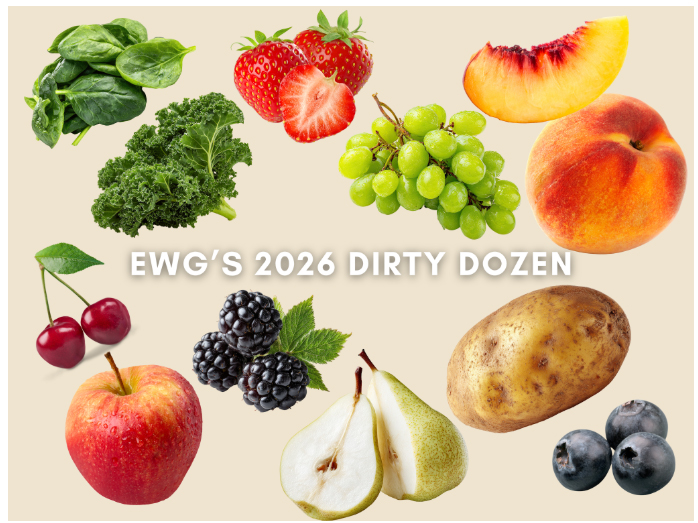
The guide is divided into the "Dirty Dozen"—produce with the highest levels of pesticide contamination—and the "Clean Fifteen"—produce with the lowest levels.
The 2026 Dirty Dozen (buy organic if you can)
According to the 2026 report, over 96% of samples in this category showed detectable pesticide residues, including "forever chemicals" (PFAS).